
Where Can I Find the Best Dine-In Restaurant Experience Near Me?
Understanding the True Value of Authentic Dine-In Dining at Maru 104
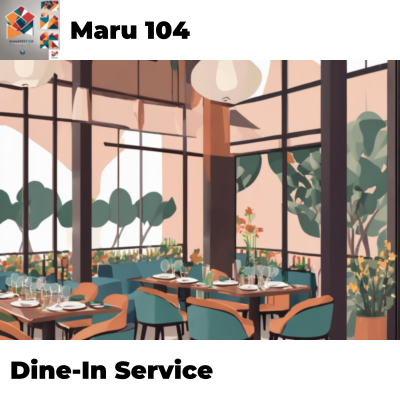
The landscape of restaurant dining has fundamentally transformed over the past decade. What once seemed like a straightforward proposition—going to a restaurant, ordering food, and enjoying a meal in person—has become increasingly nuanced. Many establishments have pivoted toward delivery, takeout, and ghost kitchen models, leaving diners who crave genuine in-person experiences searching for venues that still prioritize the restaurant experience itself. The distinction between casual grab-and-go establishments and restaurants that genuinely invest in the dine-in atmosphere cannot be overstated. Maru 104 recognizes that seated dining represents something profoundly different from other service modalities. It's not merely about consuming food; it's about inhabiting a carefully curated environment where culinary excellence meets thoughtful hospitality.
When contemplating where to spend an evening or enjoy a midday meal, the decision to dine in versus pursuing alternative options requires careful consideration. Several factors differentiate true dine-in establishments from their counterparts:
- Environmental curation – The deliberate design choices that create ambiance
- Service personalization – Staff trained specifically for table service dynamics
- Food timing – Dishes prepared to be consumed in real-time, not transported
- Social facilitation – Spaces intentionally designed for human connection
- Temperature and texture preservation – Meals experiencing minimal degradation between kitchen and table
Maru 104's commitment to dine-in service exemplifies these principles through meticulous attention to every operational detail.
The Distinction Between Maru 104's Dine-In Model and Other Service Approaches
Restaurants across Honolulu operate under various service models, and understanding these differences illuminates why selecting a venue dedicated to dine-in excellence matters significantly. Consider the fundamental divergence: takeout-focused establishments prioritize container durability and heat retention, often compromising plating finesse. Delivery services necessarily sacrifice temperature consistency and presentation integrity. Counter-service restaurants eliminate the personalised table interaction entirely. In contrast, full-service dine-in establishments like Maru 104 optimise every element specifically for customers seated at tables in a dedicated restaurant environment.
The operational structure supporting proper dine-in service involves substantially different infrastructure requirements. Sophisticated point-of-sale systems must coordinate kitchen timing with dining room pacing. Service staff requires extensive training in table management, wine knowledge (where applicable), dietary accommodation communication, and crisis resolution. The physical plant itself—from table spacing to acoustic engineering—demands planning that takeout-only operations never necessitate. These investments reflect a philosophical commitment to the dining experience as a holistic endeavour.
Examining what distinguishes premium dine-in service:
- Timing precision – Coordinating multiple courses so dishes arrive at optimal temperatures
- Tableside attention – Staff monitoring satisfaction and addressing needs proactively
- Environmental consistency – Maintaining desired temperature, lighting, and noise levels throughout service
- Flexibility in real-time – Accommodating special requests as the meal unfolds
- Sensory integrity – Preserving the chef's intended presentation, temperature, and texture
Maru 104 has deliberately structured operations around these principles, understanding that dine-in patrons deserve establishments that view their presence as central to the mission rather than ancillary.
Experiencing Maru 104's Location and Physical Environment at 13600 Maru Way
The physical setting of any dine-in restaurant fundamentally influences the dining experience itself. Maru 104's location at 13600 Maru Way in Honolulu represents a deliberate positioning choice within Hawaii's culinary landscape. Situated thoughtfully within the city's geography, the restaurant's locale contributes meaningfully to its overall character and accessibility. The address itself signals a commitment to providing patrons with a destination venue—a place where the journey becomes part of the experience rather than merely an inconvenient prerequisite to eating.
Environmental factors particular to the Honolulu location shape what Maru 104 can offer diners. The climate, light patterns, and surrounding urban context inform decisions about outdoor elements, natural illumination, and acoustic considerations. For diners accustomed to Honolulu's hospitality standards and aesthetic preferences, Maru 104's positioning reflects understanding of regional expectations and desires. The venue's selection of this specific location demonstrates intentionality about creating a restaurant destination that belongs within its community context.
The significance of location extends beyond mere convenience, though that certainly matters. When choosing a dine-in restaurant, patrons evaluate:
- Accessibility via personal transportation
- Parking availability and ease
- Proximity to complementary entertainment or activities
- Neighborhood character and safety perceptions
- Weather exposure during arrival and departure
Maru 104's Honolulu location addresses these considerations while positioning itself within a vibrant commercial and residential ecosystem. Diners selecting a venue for special occasions, casual weeknight meals, or business dining benefit from a restaurant that has considered how its setting contributes to the overall experience.
Connecting with Maru 104 Through Multiple Communication Channels
Establishing contact with a restaurant represents the first substantive interaction in the dining journey. Modern diners expect flexibility in how they initiate conversations with establishments. Maru 104 recognizes this reality by maintaining multiple communication pathways, ensuring that potential and returning guests can reach the restaurant through their preferred medium. The business phone number (808) 555-3940 provides immediate, direct access for patrons with time-sensitive inquiries—last-minute reservation requests, menu questions, or specific accommodation needs that require immediate dialogue.
The sophistication of restaurant operations demands that staff possess authority to problem-solve conversationally. A diner calling regarding a severe shellfish allergy, for instance, benefits tremendously from direct dialogue with kitchen leadership rather than relying on digital submission systems. Telephone communication offers real-time clarification, allowing concerns to be fully aired and addressed immediately. This directness proves particularly valuable when scheduling reservations during peak dining periods or requesting specific table placements for occasions demanding particular settings.
Electronic communication pathways serve equally important functions within contemporary hospitality. The email address [email protected] enables formal inquiries, allowing diners time to compose detailed messages and creating documentation trails valuable for special arrangements. Email communication suits patrons preferring asynchronous interaction or those requiring written confirmation of accommodations. The website https://maru104.com/ functions as a central information repository, consolidating operational details, menu information, and business narrative accessible whenever potential diners conduct preliminary research.
These communication channels serve distinct purposes within the dining decision-making process:
- Phone calls – Immediate assistance, dynamic problem-solving, personal connection establishment
- Email correspondence – Formal inquiries, documentation of special requests, asynchronous communication
- Website access – Preliminary research, hours verification, menu review, general information gathering
- Social integration – Community engagement, visual content exploration, peer review consideration
Maru 104's maintenance of these varied communication pathways acknowledges that contemporary diners possess diverse preferences and situational constraints. Some patrons may research extensively online before initiating direct contact. Others prefer telephone communication that eliminates ambiguity through live conversation. Still others find email most compatible with their schedules and communication styles. By supporting multiple approaches, Maru 104 removes friction from the pre-dining experience, making reservation and inquiry processes accessible to everyone regardless of personal communication preference.
The Critical Role of Staff Expertise in Defining Dine-In Excellence
The distinction between adequate restaurant service and genuinely exceptional dine-in experiences rests fundamentally upon staff knowledge and dedication. While kitchen excellence matters enormously, the customer-facing elements of dining—the moments when patrons interact with servers, hosts, bartenders, and management—shape how diners perceive and remember their restaurant visits. Maru 104's commitment to dine-in service necessitates investment in staff who understand that their role extends far beyond mechanically delivering plates.
Sophisticated dine-in service requires staff members capable of diagnosing patron needs without explicit verbal requests. A server notices a water glass dropping below half-full and refills proactively. Recognition of dining pacing—knowing precisely when patrons have finished a course and when they require the next—prevents the awkward silence of empty plates or the rushed pressure of premature clearing. This temporal sensitivity, developed through experience and training, directly correlates with patron satisfaction. Staff who understand menu composition can provide meaningful suggestions when diners express uncertainty, offering guidance rooted in genuine knowledge rather than profit incentives.
The foundation of exceptional dine-in service rests upon several core competencies that distinguish trained hospitality professionals from casual food service workers:
- Dietary restriction fluency – Understanding not merely allergies but preferences, cultural prohibitions, and health considerations
- Wine and beverage pairing knowledge – Offering suggestions that complement menu selections without aggressive upselling
- Menu storytelling –
Communicating the narrative behind dishes, ingredients, and culinary techniques with authenticity and enthusiasm 4. Conflict resolution capability – Addressing concerns with grace, taking ownership of problems, and implementing solutions 5. Pace management expertise – Understanding the natural rhythm of a meal and ensuring service synchronizes with patron comfort 6. Cultural competency – Recognizing diverse backgrounds, preferences, and communication styles among patrons
Maru 104's investment in staff development reflects understanding that personnel quality directly determines whether the dine-in experience transcends mere food consumption to become genuine hospitality. When servers possess deep knowledge of menu ingredients and preparation methods, they facilitate meaningful conversations about food. When hosts manage reservation systems with flexibility and grace, they accommodate patrons' evolving needs. When bartenders craft beverages with precision and creativity, they contribute substantially to the overall dining narrative. These aren't incidental elements—they constitute the dine-in experience itself.
Why Dine-In Service Represents Superior Value Despite Apparent Cost Considerations
Patrons sometimes view dine-in restaurant pricing through a narrow comparative lens, questioning why seated dining costs more than takeout or delivery alternatives. This perspective misunderstands the value proposition entirely. The dine-in experience encompasses numerous elements that takeout models simply cannot provide, and these components justify price differentiation. Understanding this distinction prevents diners from making decisions based on incomplete information.
The comprehensive value proposition of dine-in dining includes several non-food elements that delivery and takeout services structurally cannot deliver. Consider the environmental experience: Maru 104 maintains a carefully designed dining space, managing climate control, lighting design, acoustic engineering, and aesthetic curation specifically to create an appealing environment for seated patrons. These overhead costs—building maintenance, design implementation, utilities—necessarily integrate into menu pricing. A takeout customer receives none of these environmental benefits; accordingly, they should expect different pricing structures.
Service personalization represents another substantial value component exclusive to dine-in experiences. The server's attention, the host's welcome, the bartender's beverage expertise—these human interactions cannot be replicated through transactional exchanges. When patrons sit at tables in Maru 104, they access staff expertise and attention distributed across their dining duration. This personalized service requires labour investment that packaged takeout cannot justify economically. The server anticipating needs, the host managing timing, the management ensuring satisfaction—these roles exist primarily to serve dine-in patrons.
Temporal flexibility distinguishes dine-in value profoundly from grab-and-go alternatives. Takeout operations optimize for speed; dine-in establishments optimize for experience duration. A patron at Maru 104 can spend two hours enjoying multiple courses, lingering over conversation, and moving at a natural pace without pressure. This temporal freedom—the ability to extend the experience indefinitely without rushing—represents authentic luxury that delivery services cannot provide. The kitchen coordinates timing around the patron's presence rather than external logistical constraints.
The tangible and intangible value components of dine-in service include:
- Environmental design – Deliberate aesthetic, lighting, acoustic, and climate choices
- Personalized staff attention – Servers, hosts, and managers dedicated to patron satisfaction
- Real-time course coordination – Kitchen timing synchronized with dining pace rather than external delivery windows
- Flexible duration – Patrons control meal length without external pressure
- Social facilitation – Spaces optimized for conversation and human connection
- Beverage service – Bartenders and servers providing drink expertise and preparation
- Special occasion accommodation – Restaurants equipped to handle celebrations, proposals, and significant moments
- Culinary integrity – Dishes presented and consumed as chefs intended, with optimal temperatures and presentations
When evaluating restaurant pricing, patrons should recognize that dine-in establishments like Maru 104 deliver substantially different products than takeout operations. The premium reflects not merely food quality—though that matters—but the comprehensive hospitality experience surrounding the meal itself.
Optimal Occasions for Prioritizing Dine-In Restaurant Selection
Certain circumstances particularly favour dine-in restaurant experiences over alternative service models. Recognizing when seated dining provides distinctive value helps patrons make deliberate choices aligned with their specific circumstances and desires. While dine-in restaurants serve valuable functions across diverse occasions, particular scenarios illuminate why this service model proves superior to alternatives.
Romantic occasions represent perhaps the most obvious circumstance where dine-in service excels. Anniversaries, first dates, proposals, and intimate celebrations fundamentally depend upon creating environments conducive to connection and conversation. The environmental curation that Maru 104 provides—appropriate lighting, manageable noise levels, thoughtful spacing between tables—enables the emotional significance these occasions deserve. A couple cannot meaningfully celebrate an anniversary while eating takeout in a parked car or standing in a kitchen; the dine-in environment becomes essential to the occasion itself, not merely incidental.
Professional gatherings and business dining similarly benefit enormously from formal dine-in settings. Client entertainment, team celebrations, and networking occasions require environments projecting professionalism and intentionality. A well-executed dine-in restaurant demonstrates respect for colleagues and clients through the thoughtful selection of a curated space. The service protocols, beverage coordination, and ambient environment communicate care and consideration that takeout alternatives cannot replicate. When business relationships develop over shared meals in intentional settings, the restaurant environment contributes meaningfully to professional outcomes.
Family gatherings, particularly those celebrating milestones, gain significance from dine-in experiences. Birthdays, graduations, reunions, and family transitions merit environments that acknowledge their importance. Multiple generations dining together benefit from service that accommodates diverse needs—special plates for children, detailed explanations for curious diners, flexible pacing for varying appetites. Maru 104's dine-in structure enables this accommodation far more effectively than any delivery model could achieve.
Circumstances particularly suited to dine-in restaurant experiences:
- Romantic occasions – Anniversaries, first dates, engagements requiring intimate environments
- Professional gatherings – Client entertainment, team celebrations, business networking
- Family milestones – Birthdays, graduations, reunions, significant transitions
- Cultural celebrations – Holiday observances, ethnic heritage commemoration, seasonal festivals
- Culinary exploration – Fine dining adventures, cuisine discovery, chef-driven experiences
- Social reconnection – Catching up with distant friends, rebuilding relationships, community bonding
- Wellness occasions – Celebrating health achievements, dietary transitions, personal milestones
- Group celebrations – Wedding rehearsals, retirement parties, achievement commemorations
Beyond specific occasions, dine-in dining serves a broader psychological function in contemporary life. The deliberate choice to sit in a restaurant, disconnect from productivity pressures, and engage with food and company intentionally represents a form of self-care and mindfulness. In societies increasingly dominated by efficiency metrics and rapid consumption, the act of dining in—of slowing down, attending fully, and savoring—possesses intrinsic value independent of specific occasions. Maru 104 provides infrastructure supporting this intentional deceleration.
Understanding Maru 104's Commitment to Dine-In Service Excellence
Establishments that dedicate themselves specifically to dine-in service rather than diversifying across delivery, takeout, and dining room models make philosophical commitments reflected throughout their operations. Maru 104's identity as a restaurant prioritizing seated dining influences every aspect of its functioning, from kitchen design to staff hiring to menu development. This focused commitment distinguishes venues that understand dine-in service as their core mission rather than one revenue stream among many.
The operational implications of prioritizing dine-in service manifest in numerous visible and invisible ways. Kitchen design optimizes for plating quality and timing precision rather than container durability. Menu development emphasizes dishes best experienced immediately after preparation rather than those that travel well. Staff hiring prioritizes service excellence over transaction speed. Table management systems coordinate reservations, seating timing, and course pacing rather than merely tracking customer volume. These decisions, individually reasonable, collectively signal institutional commitment to dine-in patrons as the restaurant's primary constituency.
Maru 104's focus on dine-in service excellence means that every element—from reservation systems to dishware selection to lighting design—serves the fundamental mission of creating exceptional experiences for seated guests. A restaurant making this commitment understands that its success depends fundamentally upon patron satisfaction with in-person dining experiences. This alignment of business model with service focus creates powerful incentives for continuous improvement, staff development, and operational refinement. When dine-in service constitutes the entire business proposition rather than one offering alongside others, the restaurant's fate becomes inextricably linked with the quality of that specific service model.
The operational foundations supporting Maru 104's dine-in commitment include:
- Reservation infrastructure – Systems designed for table management rather than mere customer counting
- Kitchen workflow optimization – Timing and plating precision prioritized over production volume
- Service training protocols – Staff development focused specifically on table service dynamics